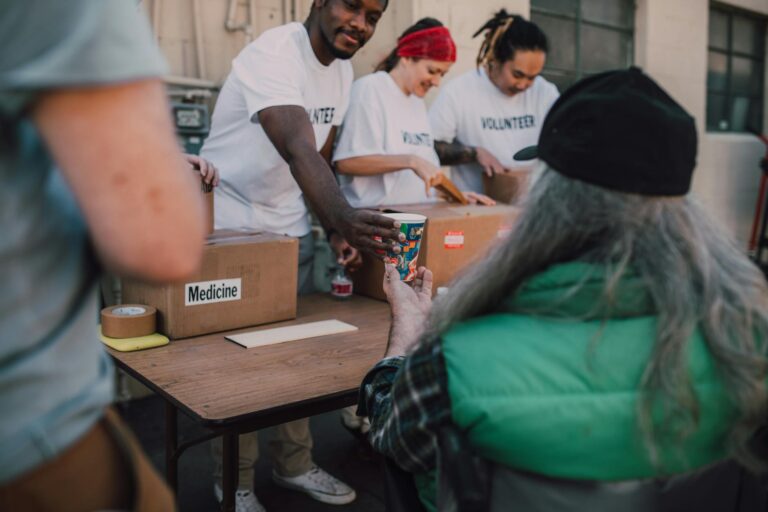

The Principle of Community
Community is the intentional practice of doing life with others, rooted in shared purpose, mutual support, and a commitment to grow, serve, and thrive together.
Living Without This Principle
When you live without community, you carry more than you were built to bear. Isolation becomes normal, and independence becomes a shield. You may feel surrounded by people but still unseen and supported by no one. Without community, your struggles feel heavier, your victories feel emptier, and your growth becomes slower. You face everything alone, your thoughts, your fears, your decisions. Over time, you either burn out trying to handle it all, or shut down to avoid the weight of connection. Either way, you miss the strength, accountability, and depth that only shared life produces.
Negative Effects of Refusing This Principle
- You carry burdens God designed to be shared and they grow heavier over time
- Isolation breeds blind spots that honest community would have revealed
- Victories feel hollow because there is no one who understands what they cost
- Growth slows because you lose the sharpening that comes through genuine relationship
- Decisions are made in a vacuum without the wisdom of people who know you well
- Gifts go underdeveloped because there is no context to deploy and refine them
- The protection that comes from covenant community is absent when you need it most
What This Principle Unlocks
Community unlocks strength, healing, and shared progress. It reminds you that you do not have to have it all together to belong. You grow faster, love deeper, and live bolder when you are connected. The right people help carry your burdens, call out your gifts, and walk with you through both storms and success. Community multiplies joy, reduces isolation, and creates the kind of support system that strengthens you from the inside out. You do not just survive; you rise together.
Positive Effects of Accepting This Principle
- Burdens are shared and become bearable rather than crushing
- Blind spots are revealed through honest relationships that see what you cannot
- Growth accelerates because you are being sharpened by people ahead of you and beside you
- Victories become celebrations because people who know what they cost are there to share them
- Decisions are wiser because they are informed by trusted voices who know you well
- Your gifts are activated and refined in the context of people who need what you carry
- You have covering, accountability, and strength available in the moments that matter most
Long Term Outcomes
- A life marked by depth and connection rather than surface-level isolation
- Relationships of covenant strength built through years of showing up consistently
- A network of trust that carries you through the hardest seasons
- A legacy shaped by what you built and who you built it with
- The impact that only comes from people doing life and purpose together over time
- A community culture shaped by the standard you set through how you showed up
- The kind of fruitfulness that requires many hands, not just one
Hebrew and Greek Root Words
Hebrew: chaver (חָבֵר), companion, friend, or one who is joined with another; implies a bond of genuine solidarity that goes beyond casual association and into real shared life.
Greek: koinonia (κοινωνία), fellowship, partnership, or deep relational sharing; implies mutual commitment and shared life. Used in Acts 2:42 to describe the defining characteristic of the early church community.
Bible Verses
Genesis 2:18: “The Lord God said, ‘It is not good for the man to be alone. I will make a helper suitable for him.'”
Ecclesiastes 4:9-10: “Two are better than one, because they have a good return for their labor: If either of them falls down, one can help the other up.”
Acts 2:42: “They devoted themselves to the apostles’ teaching and to fellowship (koinonia), to the breaking of bread and to prayer.”
Hebrews 10:24-25: “And let us consider how we may spur one another on toward love and good deeds, not giving up meeting together, but encouraging one another.”
Examples of People in the Bible
The Early Church: After Pentecost, the early believers did not scatter back to their individual lives. They gathered together daily, devoted themselves to the apostles’ teaching, broke bread from house to house, shared meals with glad and sincere hearts, and sold property to meet the needs of anyone among them who lacked. They were not united by shared ethnicity, social class, or background; they were united by the Spirit and by a shared commitment to Jesus and to one another. The result was a community that grew in strength and number, marked by a generosity and unity so unusual that it drew the attention of everyone around them. Their communal life was not incidental to the spread of the gospel; it was one of the most powerful demonstrations of it. The early church’s vitality was inseparable from the depth of its shared life (Acts 2:42-47).
Ruth and Naomi: When Naomi’s husband and sons died in Moab, she told her daughters-in-law to return to their own people. Orpah kissed her goodbye and left. Ruth refused. She said to Naomi, “Where you go, I will go. Where you lodge, I will lodge. Your people shall be my people, and your God my God.” Ruth walked away from everything familiar, her homeland, her culture, her prospects, to stay in community with a grieving widow who had nothing to offer her. In Bethlehem, their loyalty and shared life opened doors that neither of them could have accessed alone. Ruth found favor with Boaz in the fields because of her known loyalty to Naomi. That community of two, built on sacrifice and covenant rather than convenience, produced restoration, provision, and a lineage that led to David and ultimately to Jesus. Their bond was not just emotionally meaningful; it was redemptively strategic (Ruth 1:16-17, 4:13-17).
David and Jonathan: When David came to the court of King Saul after killing Goliath, the king’s son Jonathan did something unexpected. He made a covenant with David, gave him his robe, his armor, his sword, his bow, and his belt, pledging himself to David’s welfare over his own interests. That covenant held across years of Saul’s attempts to kill David, as Jonathan repeatedly warned David, protected him, argued for him before the king, and risked his own position and safety to preserve the man God had chosen. Their friendship was not built on what they could get from each other; it was built on covenant, loyalty, and genuine love that transcended the political tensions between them. After Jonathan’s death, David sought out his crippled son Mephibosheth and restored everything that had belonged to Saul’s household, giving him a permanent seat at the king’s table because of his covenant with Jonathan. The depth of that community shaped both lives and its fruit outlasted both of them (1 Samuel 18:1-4, 20:42).
Tips
- Do not wait for the perfect group. Lean into real, honest relationships where you are. The community you are looking for will not arrive fully formed; it is built through showing up consistently in the ordinary moments with the people already around you.
- Be vulnerable. Authentic connection starts when someone goes first. If you are waiting for others to show up honestly before you do, you will wait a long time. Be the one who leads with truth and creates the space for others to follow.
- Show up consistently. Trust is built in presence, not perfection. The person who shows up reliably over time builds something that the person who appears brilliantly and then disappears never can. Consistency is the most underrated community-building practice.
- Look for people who sharpen your character, not just your comfort. The most valuable community relationships are the ones that challenge you to grow, not just the ones that affirm where you already are. Both have a place, but the ones that develop you are the ones that sustain your calling.
- Create space for others. Community is not about fitting in; it is about making room. Actively look for who is on the outside of connection and bring them in. The culture of a community is shaped by who has space in it.
- Carry someone else’s burden, even when you are carrying your own. Galatians 6:2 does not say to carry burdens when you are unburdened yourself. Showing up for others in hard seasons, even during your own, is one of the most powerful expressions of community.
- Remember that community takes effort, but isolation costs more. The friction of real community, the misunderstandings, the inconvenience, the work of repair, is far less costly than the slow erosion that comes from carrying everything alone across years.
Connected Theme: Service
Service is how community grows strong. While community gives you a place to belong, service gives you a purpose within it. When you serve others in love, you deepen trust, strengthen connection, and create the kind of culture that transforms lives. In community, you are not just a consumer; you are a contributor. You do not just receive; you give, and in giving, you grow. To learn more, read The Principle of Service.