
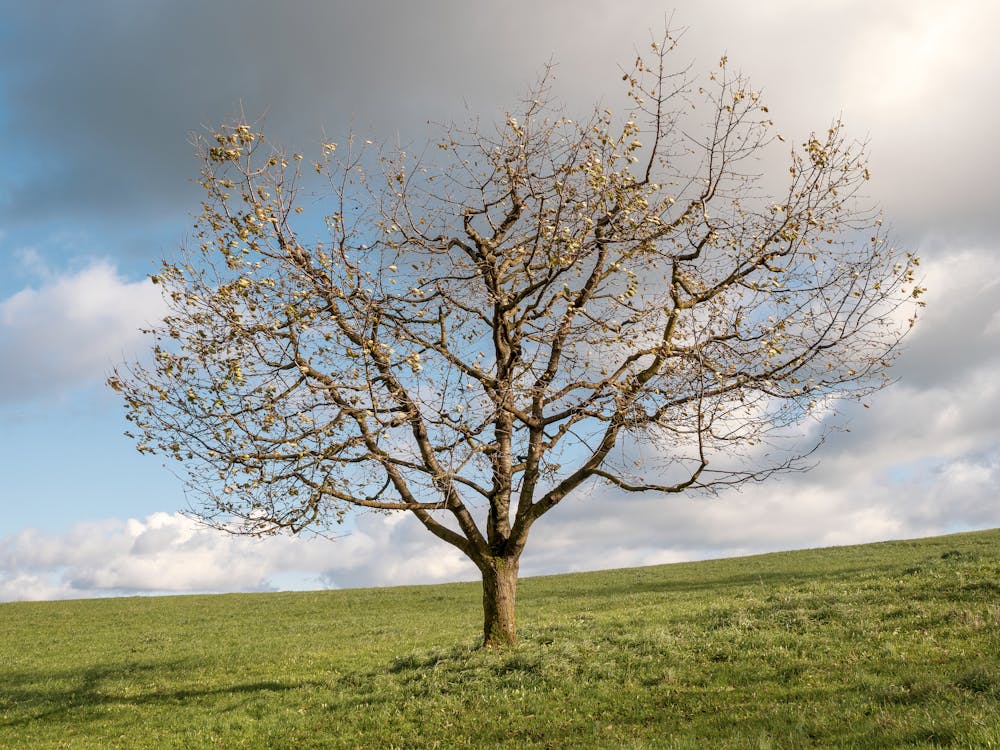
The Principle of Seasons
Seasons are the God-designed cycles of planting, growing, harvesting, and resting that govern every area of life. Wisdom is the ability to identify which season you are in, respond to it appropriately, and trust that every season is temporary and purposeful.
Living Without This Principle
Without an understanding of Seasons, you fight the current state of your life instead of working with it. You try to harvest what has not yet grown, skip the planting that makes future harvests possible, or refuse the rest that every sustainable life requires. You compare your winter to someone else’s summer and conclude you are behind. You treat the quiet of a planting season as the absence of God rather than His preparation for what comes next. Without seasonal wisdom, you burn out in seasons that called for stillness and stagnate in seasons that called for movement.
Negative Effects of Refusing This Principle
- Fighting the wrong season
- Burnout from demanding harvest in a planting season
- Chronic comparison
- Missing God in quiet seasons
- Stagnation when action was needed
- Impatience that costs you the formation
- A life out of sync with God’s rhythm
What This Principle Unlocks
When you understand Seasons, you develop a long view of your life. You can move through a difficult winter season because you know spring is coming. You can work hard in a growth season because you understand what you are building. You can rest without guilt when it is harvest time. Most powerfully, you can find God in every season, His provision in plenty, His refinement in lack, His presence in both the noise and the silence.
Positive Effects of Accepting This Principle
- Appropriate responses to each season
- Peace in difficult seasons
- Willingness to do the invisible work
- Fruitfulness at the right time
- Ability to rest without guilt
- God found in every season
- A life with a long-term perspective
Long Term Outcomes
- Consistent fruitfulness over a lifetime
- Character formed through every kind of season
- A testimony spanning decades
- Faithfulness maintained through winter and summer
- Greater capacity in each new season
- Peace with God’s timing
- A life that finishes well
Hebrew and Greek Root Words
et (עֵת): an appointed time or season. As used in Ecclesiastes 3, where every dimension of human life is assigned its proper season by God. The word implies divine governance. Seasons are not random but ordered, not arbitrary but purposeful.
kairos (καιρός): a strategic, appointed time or season. Used throughout the New Testament to describe God’s appointed moments of fulfillment and purpose. Paul speaks of the kairos when the right season of harvest arrives (Galatians 6:9) and of the present kairos as a critical opportunity not to be wasted (Romans 13:11).
Bible Verses
Ecclesiastes 3:1: “There is a time (et) for everything, and a season for every activity under the heavens.”
Galatians 6:9: “Let us not become weary in doing good, for at the proper time (kairos) we will reap a harvest if we do not give up.”
Genesis 8:22: “As long as the earth endures, seedtime and harvest (et), cold and heat, summer and winter, day and night will never cease.”
Psalm 1:3: “That person is like a tree planted by streams of water, which yields its fruit in season (et) and whose leaf does not wither, whatever they do prospers.”
Romans 13:11: “And do this, understanding the present time (kairos): The hour has already come for you to wake up from your slumber.”
Examples of People in the Bible
Joseph: Joseph was the second youngest of twelve brothers, favored by his father and resented for it. He received dreams suggesting he would one day lead his family, then was promptly sold into slavery by those same brothers and taken to Egypt. What followed were thirteen years of seasons that moved in the opposite direction of those dreams: a slave season, a steward season in Potiphar’s household, and a falsely accused season in prison. But each season was doing specific work. The slavery taught him humility and faithfulness without recognition. The prison gave him the connections that would open the door to the palace. When the palace season finally arrived, Joseph was not just older. He was formed. Every season had built something the next one required (Genesis 37-41).
Solomon: Solomon was perhaps the most theologically reflective person in the Bible on the nature of seasons. His meditation in Ecclesiastes 3 is the most comprehensive examination of this principle in Scripture, listing twenty-eight contrasting seasonal realities: a time to be born and a time to die, a time to plant and a time to uproot, a time to tear down and a time to build. His conclusion after surveying the full range of human experience was this: God makes everything beautiful in its time. The wisdom Solomon identified is not the ability to avoid difficult seasons but the ability to recognize what each season is doing and align with it rather than resist it (Ecclesiastes 3:11).
The Early Church at Pentecost: After Jesus rose from the dead, he gave his followers a clear instruction: go to Jerusalem and wait. Do not begin the mission yet. Wait for the gift that is coming. The disciples obeyed. One hundred and twenty of them gathered in an upper room and waited together in prayer for ten days. Then the Holy Spirit fell, and the church was born in a single morning with three thousand people responding to Peter’s message. The preparatory season of waiting was not a delay in the mission. It was the condition that made the mission possible (Acts 1:4-2:41).
Tips
- Identify the season you are currently in and name it honestly. Are you planting, growing, harvesting, or resting? Naming your season clearly is the first step to responding to it well.
- Adjust your expectations to match your season. Do not demand harvest fruit from a planting season. Each season has its own appropriate output, and comparing the wrong outputs creates needless frustration.
- In winter seasons, focus on root work. Character, prayer, study, and preparation rather than visible results. What grows deepest in winter sustains the heaviest harvests later.
- Do not compare your season to someone else’s. Their summer is not your standard. You are on a different timeline with a different assignment, and God’s timing for your life is specific to your calling.
- Ask what each season is designed to produce in you. Every season has a God-given purpose. Asking what He is forming in you right now shifts you from fighting the season to working with it.
- Trust the rhythm: what you plant faithfully today, you will harvest in its proper season. Galatians 6:9 is a promise. Do not give up before the harvest arrives.
- Give thanks in every season. Not because every season is easy, but because every season is purposeful. Gratitude keeps you anchored in what God is doing even when you cannot yet see what it is.
Connected Theme: Productivity
Seasons and timing work together. The Principle of Seasons describes the larger cycles, the recurring rhythms of growth and rest that govern every life. The Principle of Productivity describes how to steward your time and energy within those cycles so that the right work happens at the right time. Understanding seasons keeps you oriented. Productive stewardship of each season keeps you positioned.